Advice
Radiators cold at the top: what it is, and what it should cost to fix
This is the single most common call we get between October and February, and it is worth knowing the difference before you ring anyone, because one version of this costs nothing and the other costs a few hundred pounds.
Cold at the top, warm at the bottom
That is air trapped in the radiator. Air rises, so it sits in the top third and stops the water reaching it. You fix it with a bleed key and about ninety seconds of your time. Turn the heating off, let it cool, hold a cloth under the valve at the top corner, turn the key a quarter turn until it hisses, and close it the moment water appears.
If you are bleeding the same radiator every few weeks, that is different. Air that keeps coming back usually means the system is drawing it in somewhere, and that is worth a look.
Cold at the bottom, warm at the top
That is sludge. Iron oxide builds up in the bottom of the radiator over years and the water cannot get through it. Bleeding will do nothing at all.
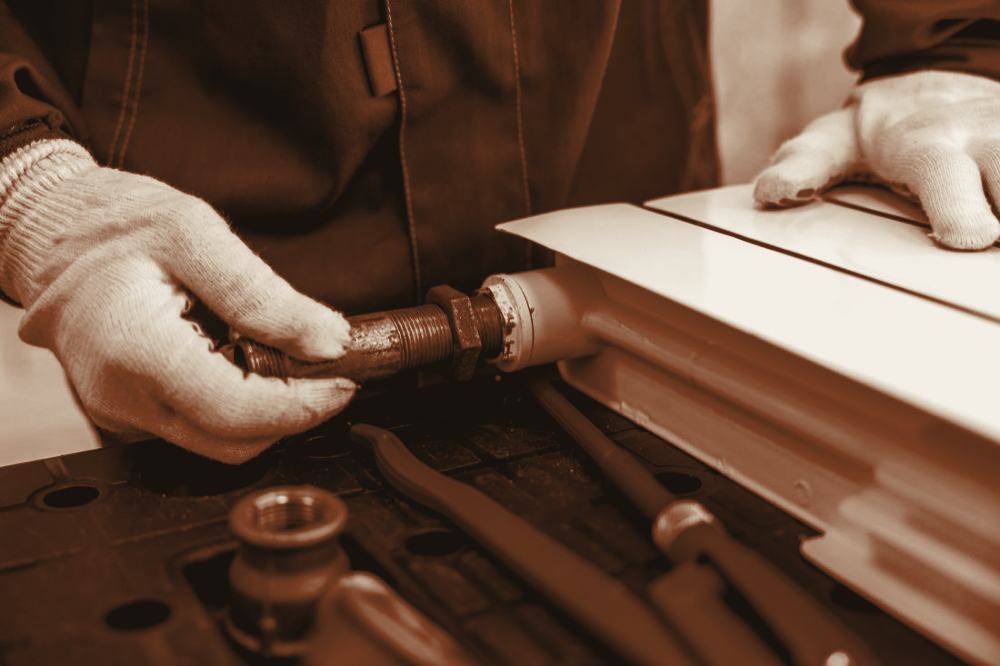
A single bad radiator can often be taken off, flushed outside and refitted. A whole system full of it needs a powerflush, which for a typical eight radiator house is around £480 including a magnetic filter to stop it happening again.
The honest bit
A powerflush is a genuinely useful job on a sludged system and a complete waste of money on a clean one. If someone recommends one without opening a radiator valve to look at the water first, get a second opinion. Black water means yes. Clear water means somebody wants £480.